
ARTICLE
AI, Data Centres and the Grid: Can Power Supply Keep Up?
AI’s rapid growth is colliding with one of its biggest constraints: access to power. As data centre demand surges, operators are buying generation, bringing their own power and offering flexibility to secure faster grid connections.
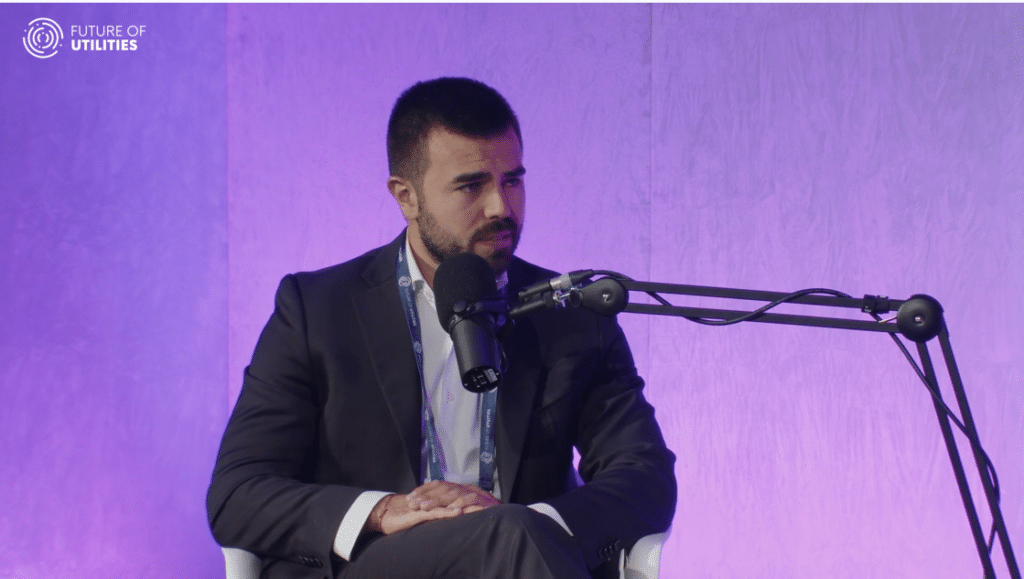
Future of Utilities’ Sebastian Fox (SF) speaks to Karthik Subramanian (KS), Analyst at Lux Research, about Google’s $4.75 billion Intersect Power deal, whether the grid can keep pace with AI, and how the data centre boom could reshape the power system.
Q: (SF) Google spent nearly five billion dollars buying a power company. Why does an AI company want to own power generation?
A: (KS) Well, Google did create a stir within the utility space late last year when they announced that they would acquire Intersect Power’s energy assets in an all-cash deal worth USD 4.75 billion, because of what it could mean for utilities and other energy companies powering data centre operators. This type of vertical integration is down to how “Time to power” or “speed to power” has become a big constraint for AI companies and data centre operators right now, enabling Google to get quicker access to power than having to compete for power procurement. You can think of this event as similar to how Amazon started ordering aircraft for its logistics fleet. Amazon did not replace a logistics company like DHL, for example, but only bought aircraft to help expedite delivery and have more control over its premium services like Prime. It is just about getting power as quickly as possible. In fact, if you look at Google’s deal, Google has not completely acquired Intersect Power but only bought assets that will help directly power its data centres in strategic locations.
Q: (SF) How big is the data-centre surge really? And, thinking about AI’s energy demand surge and the grid: can the grid keep up with this rising demand?
A: (KS) Well, the short answer is no, especially if you consider the level at which AI data centres, or data centre services in general, are projected to surge over the coming years. The IEA, for instance, expects data centre demand to double by 2030 from 2024 levels, with the U.S. projected to be the largest contributor to this growth; the U.S. and Europe are the largest contributors today. These two regions are well known for their struggles in ramping up and upgrading the grid, be it due to delays related to obtaining new interconnection capacity or due to grid congestion challenges. Therefore, a lot must be done for the grid to maintain its level of reliability as such demand centers grow.
Q: (SF) Speaking of what can be done: we are seeing a lot of data centres being capable of being switched off during grid stress and being told to do so; some can drop to near zero in mere minutes. How does that work?
A: (KS) Well, it’s actually easier said than done, because a data centre would much prefer to keep providing services for as long as possible, and not to mention, if you operate an enterprise data centre, customers would be very disappointed if the data servers are unavailable. Therefore, the data centre disconnecting from the grid does not mean they shut down completely; they switch to backup or on-site power generators on site during periods of grid stress in order to continue working. In fact, a lot of grid operators, for instance, EirGrid, propose that data centres even stay online during periods of grid stress, because the moment they switch off, they can create massive instabilities that can lead to a blackout, especially if the loads are large enough.
Now, another way in which data centres can help is with demand response by shifting or moving workloads around, both spatially and temporally. The challenge lies in the volume of workload that can be moved around, in addition to how long they can be shifted to reduce grid stress. This might not be possible in all scenarios.
Q: (SF) Continuing on this theme of demand flexibility, data centres flexing their power is often presented as a fix for grid strain, but your modelling suggests it isn’t. Why not?
A: (KS) Well, in our model, we looked into what flexibility means for resource adequacy, or how much power the grid can supply at all times to meet demand. What we noticed was that if you try to move data centre loads around, demand response can improve the reliability of the data centre, but the scale of the benefit was not large enough: a mere 1% gain if 100% of the computing load in the scenario we modelled was shifted by two hours. Therefore, to go back to our previous question, it depends on the time scale and volume of load being moved around. Specifically for AI workloads, if the data centre predominantly focuses on training, this form of demand response can work. Otherwise, it is difficult to execute.
Q: (SF) There’s a counterintuitive point in your work – that data centres don’t offer to flex their power to help the grid so much as to be allowed to connect to it in the first place. Flexibility is the price of entry. Can you explain that? Is it a problem?
A: (KS) Well, I think demand response, as discussed earlier, addresses this, particularly if electricity market participation is brought in. Most developers today are incentivized to bring their own power, if I borrow a term PJM Interconnection uses in the U.S., and these assets can provide power to the grid, absorb excess power, and provide ancillary services to ensure that the grid remains reliable for other consumers. We have seen companies like Enel in Europe allow the UPS system to be part of a virtual power plant to support grid operations, and data centres can flip the script if they can help visualize themselves as prosumers rather than just being consumers. And we are seeing this change already happening as we speak.
Q: (SF) Some argue AI will do the opposite of straining the grid – that it’ll help run it better, forecasting demand and balancing supply. Does that hold up?
A: (KS) We are already seeing AI being adopted on the grid side for congestion management and power re-routing to unlock grid capacity, whether that is AI-based dynamic line rating or topology optimization. We don’t have to look past the Pacific Northwest National Laboratory’s neuro-symbolic AI project, which is developing AI models combining physics-based learning with the traditional capability of LLMs to improve outcomes during disruptive events for power grids. This accelerates decision-making for grid operators to avoid unfavourable outcomes.
Q: (SF) Is AI more likely to be the grid’s biggest problem, or its biggest upgrade?
A: (KS) Right now, it’s very difficult to power AI at the scale at which the industry wants because you do have grid bottlenecks. AI solutions can also help unlock capacity, but I think solving this scaling challenge will come down to the grid becoming capable of supporting data centres. This is why data centre operators are increasingly considering behind-the-meter solutions to get to market as fast as they can.
Q: (SF) Google isn’t backing one energy source – it’s reached for nuclear, gas, geothermal, and solar-plus-battery all at once. What does that tell us about where generation’s heading? Is anything genuinely winning, or is it all-of-the above for now?
A: (KS) I would say there is no winner, and it’s not necessarily all of the above. First, we need to take a step back. Lux analysed the best possible low-carbon power sources for data centres, and gas turbines-plus-carbon capture and storage remains the most economical solution that offers the highest reliability, even with high gas prices. However, we have a gas turbine backlog today. That is why, to get power as quickly as they can, data centre developers are considering more modular gas-based solutions, like engines, or renewable microgrids for “Phase-1,” a small-scale data centre. You would start small and then scale up, because you cannot rely on renewables to meet the reliability standards of data centres alone. Five to seven years from now, when their gas turbine orders come in, that’s when they would start building out the next part of the infrastructure, eventually followed by a source like nuclear that takes 10 years to construct on average.
Q: (SF) Span and Nvidia are trialling putting AI computing inside people’s homes. Is that a real prospect, or a curiosity?
A: (KS) I think this is more curiosity rather than a real prospect. Lux has spoken to industry stakeholders who also mentioned a project in the past (I can’t remember the name now) where idle computing capacity in office desktops was used to run models at night, instead of leaving them idle. The big challenge was that they struggled to compute homogeneously due to differences in individual computers’ capabilities. It is a bit different here, but it could enable customers to use their own models for more edge computing and control, provided consumers do not mind having servers in their backyard. It will not support centralized workloads.
Q: (SF) We have seen some news around putting data centres in Space – is this something that we should be paying close attention to, and what is this trying to solve?
A: (KS) This has come up in the last six months, and is definitely not something that people should be paying close attention to. The reason why space became really interesting was because of the challenges in building out terrestrial data centres today, either for cooling or interconnection. You can power data centres in space 24×7 with solar cells; space is cold from a thermal management aspect, and it can avoid the “not-in-mybackyard” opposition data centres are facing today in several regions. Despite launch costs dropping with time, we think it’s very difficult to just put data centres in space because the launch economics are very unfavourable: it is not just the servers; you’re also launching auxiliary equipment like radiative coolers. Even if space is cold, you need several large radiators to eject heat produced by these servers. This impacts economics. And not to mention, we have space debris and maintenance issues. So this is part of the broader space economy momentum that we are seeing, where people want to test concepts like space travel. But the reality is that data centres in space will not materialize anytime soon.
Q: (SF) Where does this go over the next few years?
A: (KS) Energy demand will grow, but given the challenges in procuring power and hardware, data centre energy demand will not grow at the rate at which it is being projected to do. Data centers are targeting efficiency improvements with more efficient chips and the integration of more efficient cooling technologies, which allows for quicker grid interconnections while integrating more powerful compute and lower energy consumption.
Future of Utilities brings the industry together to share insights, showcase innovation and tackle the critical issues shaping energy and water – from strategy and digitalisation to infrastructure, customer transformation and the energy transition.
Continue the conversation at the Energy Transition Summit
Hear more from Lux Research at Future of Utilities: Energy Transition Summit, where they’ll be joined by a data centre for a fireside chat exploring “Data centres as a source of flexibility: examining the potential.”
The discussion will examine the role data centres could play in supporting a more flexible energy system – and what that means for utilities as AI-driven power demand grows.

Lux Research is a global research and advisory firm helping businesses understand emerging technologies, markets and innovation. Its utilities research explores the technologies reshaping the energy system, from grid innovation and low-carbon power to AI and the rapidly growing energy demand from data centres.

Who is Karthik Subramanian?
Karthik Subramanian is an Analyst at Lux Research, specialising in low-carbon power generation and the technologies shaping the future of energy. His research explores how utilities and other energy-intensive industries can navigate emerging technologies and the transition to lower-carbon energy systems.

Who is Sebastian Fox?
Sebastian Fox is a Director at Future of Utilities, producing content, reports, broadcasts and market-leading events that connect senior leaders across the energy and water sectors.
Future of Utilities brings the industry together to share insights, showcase innovation and tackle the critical issues shaping energy and water – from strategy and digitalisation to infrastructure, customer transformation and the energy transition.
WANT MORE?


Join us at
Europe's most significant
energy conference
21-22 April 2027 | SugarFactory, Amsterdam
Have a story to share?
Get in touch.

Blake Tarleton-Handley Business Development Manager Future of Utilities
GET INVOLVED
See Attendee List
From top-tier retailers and grid operators to innovative solution providers - including leaders from E.ON, Octopus Energy, Shell, and Ofgem - see exactly who you'll connect with across two days of high-impact networking at Future of Utilities: Energy Transition Summit (21-22 April, Amsterdam).
See the agenda
Find out what's on at Future of Utilities: Energy Transition Summit. Explore the comprehensive agenda featuring keynote presentations, workshops, panel discussions, and innovative startup pitches.
Engage energy leaders
To generate high-value leads and strategic partnerships, explore sponsorship opportunities at Future of Utilities: Energy Transition Summit (21-22 April, Amsterdam), the energy digitalisation event connecting 1,600+ senior decision-makers across grids, retailers, traders and investors. View the Sponsorship Guide to find out more.
Stay in the loop with Future of Utilities
Subscribe to our newsletter to receive news, insights and special offers.
By submitting this form you agree to our Privacy & Cookies Policy and Terms & Conditions