


Latest Episodes
Episode 11: When one failure becomes many: CReDo and the future of infrastructure resilience
With Alanna Gluck, CReDO Engagement Lead, Connected Places Catapult and Amit Bhave, Chief Executive Officer & Co-Founder, CMCL
Extreme weather can trigger cascading failures across energy, water, transport and telecoms simultaneously, yet the UK’s understanding of these interdependencies remains limited. Alanna Gluck and Amit Bhave explore what CReDo has revealed about whole-system climate risk and what better cross-sector data sharing could make possible.

Episode 12: Women in Utilities Network: building careers through connection
With Karen Anderson, Executive Director, WUN (Women’s Utilities Network), Sophia Goring, Head of ESG, Business Stream, and Naz Khanom, Head of People, Lanes Group – Thames Water
Karen Anderson, Sophia Goring and Naz Khanom on imposter syndrome as a strength, networking without the sales pitch, why mentoring benefits the mentor too, diversity’s business case, and why experience doesn’t have to mean standing still.
More Episodes
The Future of Utilities Podcast | Sponsored by Modulr
Episode 1: Can Britain avoid a water crisis? An interview with the Interim CEO of Ofwat
With Chris Walters, Interim Chief Executive Officer, Ofwat
The UK is facing a water crisis that's been decades in the making - ageing infrastructure, rising demand, and the growing pressure of climate change are converging at once. In this episode, Lindley Gooden sits down with Chris Walters, Chief Executive of Ofwat, to dig into the scale of the challenge: from planning for once-in-500-year droughts to a £104 billion investment programme, and a landmark regulatory shake-up that will reshape the sector entirely.

Episode 2: The robots are coming: are fully automated homes the future?
With Zac Curtis, Project Lead – E.ON Next Gen Home, E.ON UK
Smart thermostats, connected devices and home batteries are already making decisions on our behalf. Zac Curtis explores how close we really are to a future where homes actively participate in energy markets - and whether people are ready to trust them.

Episode 3: The quiet revolution in how utilities get paid
With Myles Stephenson, Founder & CEO, Modulr
Every utilities business runs on one thing customers almost never think about: getting paid. For decades, direct debit has been the invisible backbone of the whole operation - reliable, familiar, and largely unquestioned. But a new wave of payment technology is changing what's possible, and in this episode, Lindley Gooden sits down with Myles Stephenson, Founder & CEO of Modulr, to explore why the way utilities collect money is quietly - but fundamentally - shifting.
Episode 4: Driving the home energy transition
With Emma Fletcher, Low Carbon Housing Director, Octopus Energy
Low-carbon housing is central to the UK's decarbonisation challenge, yet millions of homes remain hard to heat and expensive to run. Emma Fletcher explores what it will take to close the gap between policy ambition and delivery on the ground.

Episode 5: Can Britain build the energy system it needs?
With Josh Buckland, Director of Strategy and Policy, EDF
The UK has been identified as the most expensive place in the world to build nuclear power plants, yet nuclear remains central to long-term energy security. Josh Buckland examines the structural barriers holding back investment, the SMR opportunity, and what a genuinely secure energy system looks like in the decade ahead.

Episode 6: Talking gibberish and siloed solutions: how water issues can learn from both nature, and Janet and John
With Matt Wheeldon, Infrastructure Development Director, Wessex Water
The water industry has a communication problem and a capital allocation problem. Matt Wheeldon makes the case for tackling issues at source rather than treating symptoms, and asks what a genuinely better-functioning water sector would look like.
Episode 7: How batteries can reduce fuel poverty and limit burgeoning grid costs
With Davide Turi, Innovation Lead, Flexibility, E.ON UK
Domestic batteries are increasingly part of the conversation around grid pressure and fuel poverty, but the commercial and regulatory conditions need to be right. Davide Turi examines how flexibility can help solve the capacity crunch and what it will take to make batteries work at scale.
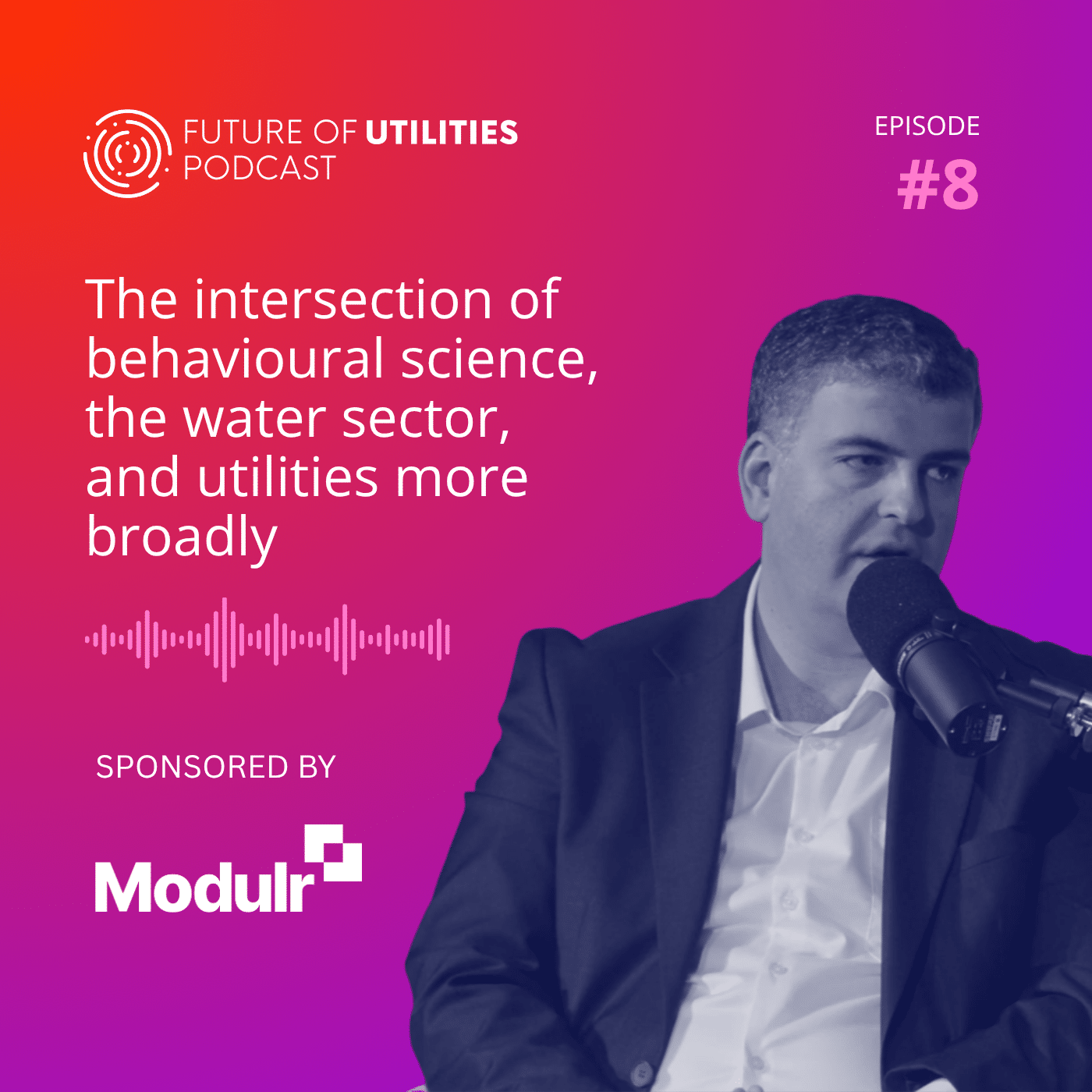
Episode 8: The intersection of behavioural science, the water sector, and utilities more broadly
With Armenak Antinyan, Head of Behavioural Economics, Thames Water
Standard awareness campaigns rarely shift water consumption behaviour. Armenak Antinyan explores how behavioural science and live field experimentation can design interventions that actually move the needle - and how you measure real-world impact rather than vanity metrics.

Episode 9: The future of energy security: The role of gas networks
With James Earl, Chief Executive Officer, Future Energy Networks
Gas networks move far more energy than electricity networks and remain a critical buffer during periods of peak demand. James Earl looks at how gas infrastructure can complement rather than compete with renewables - and whether the UK risks a resilience gap by transitioning too quickly.

Episode 10: Power Responsive: flexibility is our hidden power
With Jonathan Wisdom, Head of Market Change Delivery, NESO
The way Britain balances its energy system is changing — and businesses of all sizes have a bigger role to play than most realise. In this episode, Lindley Gooden sits down with Jonathan Wisdom, Head of Market Change Delivery at NESO, to explore how energy flexibility works, who it's really for, and why getting more businesses involved could be one of the smartest moves the sector makes.
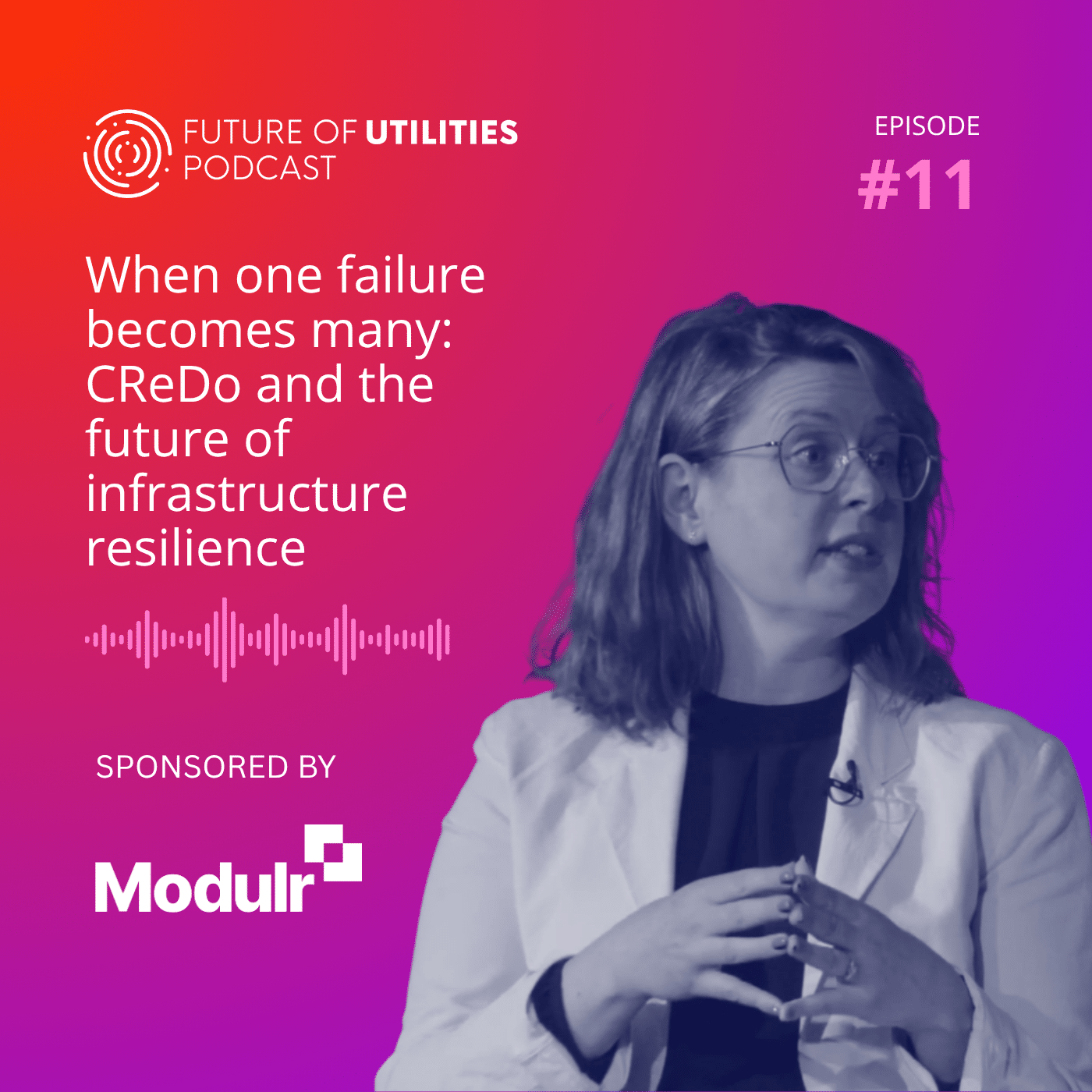
Episode 11: When one failure becomes many: CReDo and the future of infrastructure resilience
With Alanna Gluck, CReDO Engagement Lead, Connected Places Catapult and Amit Bhave, Chief Executive Officer & Co-Founder, CMCL
Extreme weather can trigger cascading failures across energy, water, transport and telecoms simultaneously, yet the UK’s understanding of these interdependencies remains limited. Alanna Gluck and Amit Bhave explore what CReDo has revealed about whole-system climate risk and what better cross-sector data sharing could make possible.

Episode 12: Women in Utilities Network: building careers through connection
With Karen Anderson, Executive Director, WUN (Women’s Utilities Network), Sophia Goring, Head of ESG, Business Stream, and Naz Khanom, Head of People, Lanes Group – Thames Water
Karen Anderson, Sophia Goring and Naz Khanom on imposter syndrome as a strength, networking without the sales pitch, why mentoring benefits the mentor too, diversity’s business case, and why experience doesn’t have to mean standing still.
Hungry for more? Check out
Future of Utilities Summit
Join senior attendees at UK's premier utilities conference.
Have a story to share?
Book a call with us to learn more.

Lewis Suckling Business Development Manager Future of Utilities
Get notified every time we release a new episode!
Register your interest to receive email notifications for podcast releases.
Stay in the loop with Future of Utilities
Subscribe to our newsletter to receive news, insights and special offers.
By submitting this form you agree to our Privacy & Cookies Policy and Terms & Conditions