
The Future of Utilities Podcast | Sponsored by Modulr
Episode 2: The robots are coming: are fully automated homes the future?
With Zac Curtis, Project Lead – E.ON Next Gen Home, E.ON UK
Will customers trade control for a flat bill?
Smart thermostats, connected devices and home batteries are already making decisions on our behalf. Zac Curtis explores how close we really are to a future where homes actively participate in energy markets - and whether people are ready to trust them.

Featured in this episode:
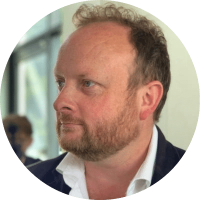
Zac Curtis
Project Lead – E.ON Next Gen Home
E.ON UK
Zac Curtis is UK Innovation Lead at E.ON and former Innovation Manager at OVO Energy, where he shapes bold, customer-focused propositions and champions a culture of creativity and agility. At E.ON, he drives future focused energy solutions bringing long term horizon thinking in to sharp focus. At OVO, Zac launched products, developed innovation culture, empowered teams to experiment, break boundaries, and scale new energy ideas fast. Zac has launched award winning products and has a customer focused approach, rooted in Design Thinking. With a passion for collaboration and cutting through complexity, Zac has rolled out practical tools and frameworks that make innovation stick — helping organisations move from talk to action. Before joining the energy sector, Zac was Innovation Director at The Innovation Beehive, where he partnered with leaders across industries — from government to global brands — to embed innovation into the heart of their culture. His work has transformed how organisations think, lead, and deliver, driving measurable gains in customer satisfaction, employee engagement, and business performance.
About Modulr
Modulr is the payments automation platform that streamlines money movement with accuracy, control and reliability – built to scale. Driving the future of finance operations, Modulr automates payment and reconciliation workflows to remove manual work, lower operational costs and reduce errors.
Processing more than 200mn transactions and over £180bn in payment value on an annualised basis, Modulr is trusted by over 6,000 businesses – from fast-growing SMEs to global enterprises.
Through a single platform, Modulr automates how money moves into and out of a business – including payroll, supplier payments, spend management and payment collection. Its integrations hub connects with more than 20 leading accounting and payroll systems, including Sage, Xero, and BrightPay, to enable automated money movement directly within existing finance workflows.
Principal memberships of global payment networks such as Visa and Mastercard, combined with direct access to central bank infrastructure, provide the reach, speed and resilience required for modern international finance operations.
To learn more please visit https://www.modulrfinance.com/

Future of Utilities Podcast
The robots are coming: are fully automated homes the future?
Zac Curtis, Innovation Lead, E.ON Next
Lindley Gooden: Hello, I’m Lindley Gooden. Welcome to the Future of Utilities podcast. Great to have you with us. Let’s talk all things next-generation home with Zac Curtis from E.ON UK. Zac, great to have you with us. Tell us a bit more about yourself.
Zac Curtis: Great to be here. I’m Zac Curtis from E.ON Next. I’m innovation lead, and I am proud, thrilled and excited to be working on something the future of which is likely to terrify everybody.
Lindley Gooden: It will affect all of us too. We’re connected in many ways – often we don’t even realise how we’re connected in our home. But how close are we to a fully automated home? Is it around the corner? Do we even realise?
Zac Curtis: I’ve got a couple of different points of view on it. If we think about the phones in our pockets, they’re connecting us to so many things already – we’re already partly down the path of connecting things together. But the home is slightly different. We know the technology exists which connects to the internet, and if it connects to the internet, it can connect to other things. If you think about IoT-based devices, we’re partly there.
Now, I’m pushing the envelope a little with something called Energy as a Service, which is extraordinarily difficult to launch in this country for various reasons. But the idea is that for no money up front, we install a full suite of low-carbon assets in your home – air source heat pump, EV charger if you need it, inverter, battery, solar panels – and open up the market so you can get those things. The beauty of it is that we optimise those things. We steer them, we control them, we demand-shift the way they use energy, using the battery but also artificial intelligence and home energy management systems. Which then means we can keep your bill flat.
Lindley Gooden: That sounds too good to be true.
Zac Curtis: It is too good to be true, but –
Lindley Gooden: – it’s true. Well, listen, we are in the early stages of AI, and that will change our relationship with our home. Of course it will. How connected will we be, and will AI hopefully make that seamless and forecast our every need?
Zac Curtis: Right now I have this trial live in the UK, where we’re steering and optimising these assets together – controlling them. The goal, firstly, is that we maintain a reasonable, low energy price, and we do that by demand-shifting, as I said, but also doing various other things behind the scenes. When we think about what that might mean for the customer, it’s all about simplicity, it’s all about keeping the cost low. Actually, whether it’s AI or any other type of algorithm controlling those assets, the customer probably won’t notice much difference. Their home is warm.
Lindley Gooden: Efficient. So it’s all done for them.
Zac Curtis: This is about balancing supply, balancing demand, and making sure we’re an integrated part of the system – rather than pulling huge amounts of energy during Coronation Street and then having nothing during daytime hours.
Lindley Gooden: Yeah, exactly that.
Zac Curtis: Peak-hour demand is increasing all the time, whether through electric vehicles or just extra energy demand at home. We need to find a way of ensuring customers can help balance the grid, but also lower their bills. It’s difficult, and perhaps unreasonable, to tell customers they need to stop using energy during peak times – so we automate it for them in a useful way.
Lindley Gooden: We’ll get to the prickly issue of trust with AI shortly, but let’s go via earning money while we sleep. How is it possible that our homes could actually be earning money for us – a much more integrated part of the grid?
Zac Curtis: It sounds like science fiction, but it’s not. Right now, with the trial – it’s just 18 homes. A small number, because it’s extraordinarily difficult to do. There’s a number of regulatory hurdles stopping us, not just with Ofgem but with HMRC and others too, that we’re working through.
Those 18 homes have customised, tailored, fixed prices – the same price every month – and we control those assets in the background to make sure that price is maintained. But this is just the start, just the test before we move to something else. In the future, that saving becomes something where excess energy can be traded with your neighbour, your family, your community. At that point it won’t just be optimisation, it’ll be whole-home orchestration – and any trading between homes or communities will earn you money while you sleep. Your home becomes an energy node.
Lindley Gooden: So it’s trading electricity, balancing supply and demand, using batteries as well, I assume. Is the aim to regulate the very local grid – maybe your own community – and also offer the best price possible?
Zac Curtis: I wouldn’t call it a principle, more a side benefit. The main principle of NextGen Home is: how do we provide customers with a predictable bill? How do we get them onto some of these low-carbon assets with no money upfront, and make it easy for them? But really, I think the key is how we ensure whole-home comfort – and this is linked to trust – so that customers aren’t thinking about kilowatt hours. It doesn’t matter, because they’re paying a fixed bill, and we’re providing them with warmth and energy when they need it. Everything in their home is done for them.
Lindley Gooden: Let’s get into trust, because inviting AI into your home might send a digital shiver down some people’s backs, understandably. Are people right to be nervous? And how do we generate trust?
Zac Curtis: My comment here is going to be slightly provocative. People aren’t necessarily right to be nervous, but they will be – especially when you say a company is going to be controlling things in your home. That feels like an invasion of some sort, even with permission.
However, we’ve done months and months of research, and under certain conditions, customers are super happy for us to control these assets. Those conditions are: does it provide a cheaper bill, and is it simple for them – they don’t have to do anything. Under those conditions, they’re fine with it. The live trial shows customers are genuinely happy – we’ve got great NPS scores, and they’re willing to keep going.
Lindley Gooden: Trust is earned, so it takes time – it becomes routine, becomes less scary, and eventually you’ve got a good relationship with your provider. Is that the flow you’re seeing?
Zac Curtis: Sort of. Here’s the provocative bit again: this is coming, whether people like it or not. I don’t mean NextGen Home specifically, I mean things being controlled in the home. It doesn’t mean you can’t override it, but our ability to keep technology from impacting us in some way is basically impossible. Technology is increasingly present and used in the home. We’re just trying to make use of that to lower customers’ bills and to save carbon or shift energy out of peak times.
[This conversation is brought to you by Modulr, the payments automation platform.]
Lindley Gooden: We’re live on stage at the Future of Utilities Summit – if you’re listening, you won’t see this, but for our audience here: hands up if you’re slightly nervous about AI in your home. Be honest.
[Audience raises hands.]
Lindley Gooden: Slightly biased audience. But that’s genuinely interesting – control is there, understanding is there. There’s a communications piece here, to make sure people really understand and trust what you’re telling them about how their data is used and how it benefits them.
Zac Curtis: Correct. In the design of NextGen Home, we’re trying to make sure customers feel comfortable – that they understand how the data is used, how we control those assets, and that they’re able to override certain things. Want your EV charged at a different time? Fine, override it. But if you keep overriding it, it undermines our ability to maintain that fixed price.
Lindley Gooden: So the flexibility is there – the ability to simply and clearly turn something off, or take back control if something’s bothering you. With 18 homes, are you feeling positive about the reactions so far? Anything surprised you?
Zac Curtis: I probably shouldn’t mention this, but – nobody’s listening, it’s fine – the thing that surprised me most is the appetite for how far this could go. I should preface this by saying it doesn’t represent agreed E.ON Next strategy. But hypothetically: if we’re talking whole-home comfort, why doesn’t your energy retailer also optimise your IoT-linked fridge? Your IoT-linked coffee machine? If your fridge breaks in future, is it so far-fetched that instead of going to AO, you go to your whole-home automation provider, and they get you a discounted fridge that plugs straight into the system?
Lindley Gooden: We’ll deal with the privacy and data issues another time – maybe that’s my own trust issue. But if you bring out your crystal ball: by 2040, what feels completely normal, and what still feels like science fiction?
Zac Curtis: I’ll have a go, because I have quite a strong vision for where energy as a service and whole-home automation go. I believe the orchestration of batteries, air-source heat pumps, solar panels, inverters, EV chargers and so on will become automatic. A lot of these assets already exist in UK homes – there’ll simply be more of them, in different bundles suited to different households. The orchestration itself will become second nature. People will want things made efficient for them automatically. Some will want to keep manual control, and that’s fine too – they might just be into it. What feels like science fiction today, we’re already doing, and it’ll become the norm.
What will still feel like proper science fiction is how your home becomes an energy node – how it interacts with the homes around it, until energy becomes almost a living, breathing organism: doing what’s financially and environmentally right, automatically.
Lindley Gooden: Well, thanks for bringing out your crystal ball. Lovely to have you with us on stage, Zac. And that’s it for now from the Future of Utilities podcast.
This conversation is brought to you by Modulr, the payments automation platform.
Hungry for more? Check out
Future of Utilities Summit
Join senior attendees at UK's premier utilities conference.
Have a story to share?
Book a call with us to learn more.

Lewis Suckling Business Development Manager Future of Utilities
Get notified every time we release a new episode!
Register your interest to receive email notifications for podcast releases.
Stay in the loop with Future of Utilities
Subscribe to our newsletter to receive news, insights and special offers.
By submitting this form you agree to our Privacy & Cookies Policy and Terms & Conditions