
The Future of Utilities Podcast | Sponsored by Modulr
Episode 6: Talking gibberish and siloed solutions: how water issues can learn from both nature, and Janet and John
With Matt Wheeldon, Infrastructure Development Director, Wessex Water
Series 1 · Recorded June 2026
"Manage rain better where it lands."
The water industry has a communication problem and a capital allocation problem. Matt Wheeldon makes the case for tackling issues at source rather than treating symptoms, and asks what a genuinely better-functioning water sector would look like.

Featured in this episode:
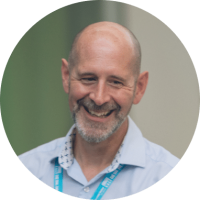
Matt Wheeldon is a Chartered Civil Engineer with over 30 years’ experience in water and sewerage. He is passionate about the environment and a strong and vocal advocate of source-control solutions to address water scarcity and water surplus issues. His decades of experience working both at the coal face and in the world of legislation and regulation, places him in a unique position to help policy makers think holistically and systemically about how to address water quantity issues and increase resilience in rapidly changing climate.
About Modulr
Modulr is the payments automation platform that streamlines money movement with accuracy, control and reliability – built to scale. Driving the future of finance operations, Modulr automates payment and reconciliation workflows to remove manual work, lower operational costs and reduce errors.
Processing more than 200mn transactions and over £180bn in payment value on an annualised basis, Modulr is trusted by over 6,000 businesses – from fast-growing SMEs to global enterprises.
Through a single platform, Modulr automates how money moves into and out of a business – including payroll, supplier payments, spend management and payment collection. Its integrations hub connects with more than 20 leading accounting and payroll systems, including Sage, Xero, and BrightPay, to enable automated money movement directly within existing finance workflows.
Principal memberships of global payment networks such as Visa and Mastercard, combined with direct access to central bank infrastructure, provide the reach, speed and resilience required for modern international finance operations.
To learn more please visit https://www.modulrfinance.com/

Future of Utilities Podcast
Talking gibberish and siloed solutions: how water issues can learn from both nature, and Janet and John
Lindley Gooden: Hello, I’m Lindley Gooden. Welcome to the Future of Utilities podcast. Great to have you with us. We’re very lucky to be joined by Matt Wheeldon from Wessex Water.
Matt Wheeldon: Thanks, Lindley – great to be here.
Lindley Gooden: Just tell us a bit about who you are and what you do.
Matt Wheeldon: I’m infrastructure development director at Wessex Water. A lot of my work is focused on trying to educate and influence policy, regulation, economic incentives and technical guidance, all to do with rainwater.
Lindley Gooden: Water is a precious resource, and you’ve had a few things to say about how water companies communicate about it. Take us through where you feel things are mismatched right now – what’s not landing, and why we should be doing it better.
Matt Wheeldon: Great question. First of all, we talk in a really complicated language. We use acronyms and words the layperson simply doesn’t understand, and that’s a barrier. When we talk about CSOs, no one knows what we mean. When we talk about AMPs, or source control solutions, or words like “catchment,” “holistic,” “integrated” – these are all technical words people don’t understand. I’ve been trying to steer the message toward something genuinely simple that lay people can follow, and then focus properly on what the actual problem is.
Lindley Gooden: You’ve lost me already, and you’re absolutely right – not only do consumers not understand it, media channels won’t cover it either, because why would they? It reads as technical detail, and it’s a water company, so the instinct is to suspect you rather than work with you. How do you change that relationship through communication? How do you reframe it so people actually understand what you’re talking about?
Matt Wheeldon: The first thing is a common narrative – we all need to focus on the actual problem. One of our biggest issues is that water companies like to point at big grey infrastructure they’ve built. You can point at the Thames Tideway Tunnel, at large new reservoirs. That’s not where our problem actually is. Our problem is how our homes are built, and how we manage rain. Because we don’t manage rain where it lands, we default to these big, centralised, grey solutions. They’re important, but they don’t tackle the problem where the problem actually is. We end up standing next to something enormous and grey, taking photos, saying “isn’t this wonderful,” while rain keeps landing on all of us and we’re still not managing it well where it falls. If we want a genuinely low-carbon, sustainable future, we have to address the problem where it actually is.
Lindley Gooden: There was a film a couple of years ago, Don’t Look Up, about an asteroid nobody wants to look at directly. Is that what this feels like?
Matt Wheeldon: Completely. Look – water is a natural resource. This is not a dry nation. We’ve been told that water companies can solve all water problems. That’s rubbish. We’re about 3% of the water cycle. Only around 3% of the rain that lands on England goes into the public water supply – there’s 97% out there we’re essentially ignoring, because we’re reliant on water companies to collect it, treat it and pump it, purely so we can fill our toilet cisterns with it. The whole mechanism is daft. We’re using high-quality drinking water for non-potable purposes, and then wondering why we’re running out of water – when there’s enough rain landing on your own roof to serve that exact purpose.
On the drainage side, we’re “fixing” storm overflows – in inverted commas – by storing contaminated rainwater and then pumping and treating it, at huge carbon cost that nobody talks about. If you look at what nature would actually have done, it would have returned that rain to the environment much closer to where it landed. So it comes down to two simple messages: we need to harness nature, and mimic nature, under the banner of managing rain better where it lands.
Lindley Gooden: If you don’t mind, I want to raise the more political issue too – the reputation of water companies. A lot of people are suspicious of water companies, the funding structures, all the murky things reported in the news, especially given you can’t switch supplier. How do you engage consumers in a way that actually rebuilds trust?
Matt Wheeldon: We could start by telling the truth: that the problem isn’t sewage, the problem is rain. That alone would be a start. I hear a lot of people defending storm overflows – “they’ve always existed” – instead of naming the actual problem, which is that rain has been added to sewage. That’s stupid. The problem behind running out of water is that we flush our toilets with drinking water. That’s stupid too. We need to start getting emotional about this, because it’s genuinely simple. Right now we talk gibberish, and then we talk in overly complicated language on top of that – no wonder we’re not making progress.
I always use Janet and John as an example – the wonderful, simple 1950s characters from British children’s books. That name exemplifies simplicity, and that’s what we need. We’ve got to get on the front foot and say: here’s the problem, plainly. That’s where we need to start focusing, on solving the actual problem. Right now, everything is working against us – legislation, regulation, economic incentives. We have to change all of that, to make the rules biased toward the right kind of solutions. It’s something I’m genuinely passionate about – I’m working with government on it, and I’ll be talking about it again later today. Changing the rules so we can address the real problem, which is rain, not sewage. Unless we talk about that properly, we’ll be forever defending sewage dumps – and that’s a losing position.
[This conversation is brought to you by Modulr, the payments automation platform. Modulr automates how money moves, delivering the efficiency, accuracy and reliability that finance operations need to scale.]
Lindley Gooden: Billions, millions, gallons – these statistics make sense to a company putting out information, but of course I care about my water supply, the heat in my home, and a lot of connected things. One conversation that’s come up a lot at the summit this year is around lifestyle, and how these different parts of life connect. It sounds woolly, but it’s coming into sharp focus this year, and water is right at the sharp end of it.
Matt Wheeldon: Definitely – and we don’t talk enough about the energy behind water. You might picture a net-zero carbon home, but it isn’t actually net zero – you’re being misled if you think it is. The energy that goes into getting water to your home, just so you can fill a toilet cistern with it, is enormous. The average pumping head is around 100 metres, and we use about 138 litres per person per day. That’s the energy equivalent of lifting a bag of sugar twice the height of Everest, per person, per day. It’s daft. And we’re building new homes exactly the same way – which is stupid. We have to start pointing out these obvious things nobody’s talking about. Water is heavy – that’s obvious. Electricity, gas, broadband are light; moving them around isn’t nearly as costly as moving something that weighs a kilogram per litre, when we’re using 138 kilograms a day, lifted 100 metres in the air to reach you. Nobody talks about the carbon footprint of that. And the problem is, our current solutions are going to make it worse, not better. We need to encourage people to be more self-reliant, more decentralised. There’s a lot of focus on solar panels harnessing sunlight as a natural resource landing on your roof – but raindrops are a natural resource landing on your roof too. Where are the economic incentives to harness that? And then to mimic nature, and get that water back into your garden rather than sending it off-site?
Lindley Gooden: I love that you used the word “ginormous” – we should use that far more than millions and billions. And gravity affects water too – it comes from on high, so capturing it higher up and letting it fall might be an interesting way to reframe this. You’re being remarkably honest with me. How popular are these views within the water industry, given how big a deal this actually is?
Matt Wheeldon: When people hear it, it’s incredibly popular, because it’s so simple. I haven’t mentioned AI once, thankfully – this isn’t about technology.
Lindley Gooden: Eight minutes in, and you’ve done it.
Matt Wheeldon: This is about a change of mindset. It’s not rocket science – it’s simple. We just need everyone leaning toward the right solutions instead of the wrong ones. Right now, as I said, legislation, regulation, technical guidance and economic incentives are all biased toward the wrong area, because it’s all built around centralised solutions. We need to change lots of small things, adopt a different mindset, and start actually valuing nature. It’s free – if we’ve got the right infrastructure, we can harness it and mimic it, and we’ll be more sustainable. Not totally sustainable, but meaningfully more sustainable than we currently are.
Lindley Gooden: We’ve covered a lot already, but let’s talk about capital allocation for a moment – the operational side of what you’re describing. You feel capital’s being allocated toward centralised projects when it should be more localised, closer to our homes. Is that right? Should there be a better spread?
Matt Wheeldon: There’s a lot working against water companies spending money in the right place. Legally, we don’t have the powers to do it in many cases. Regulatorily, we’re actively disincentivised, because that kind of spending is classified as operational expenditure rather than capital expenditure. And then there’s regulatory certainty – targets like “ten spills per year” for storm overflows drive companies toward concrete. If you have to hit a hard number, you take the low-risk approach: build a big concrete storage tank. We have to change all of the things currently pushing against source-control solutions, so that source control becomes the default choice, not the exception.
Lindley Gooden: Doesn’t that make it harder, though? You mentioned regulation – of course, in water, you need to be highly compliant, and rightly so. But when you try to change the underlying model, don’t you run into real resistance?
Matt Wheeldon: You come up against a lot of backlash from people who genuinely don’t know what they’re talking about. I think we should largely ignore them, and instead, more of the people who do know what they’re talking about should be getting airtime. The problem is, they don’t. Our media loves negative news – loves people getting emotional about things that aren’t true, or are only partially true. It’s very difficult to get a good-news, common-sense message across, even though this genuinely is one. Everyone wins here – customers win, the environment wins, water companies win. Everyone’s a winner, and it’s genuinely simple.
Lindley Gooden: As a former member of the British media myself, I completely agree. But let’s flip that for a moment – where are the pockets of hope? Where do you think the right conversations are actually happening? We’re having one here, but that’s a drop in the ocean. Where else?
Matt Wheeldon: DEFRA get it. They’re genuinely on board – if you read the new Vision for Water, they’re saying exactly the same thing. Listen to what the Water Minister, Emma Hardy, is saying – same message. So we’ve got a government that understands the problem and is now working out how to actually deliver it. We need regulators on board too – giving companies more regulatory freedom to do the right thing, rather than punishing them if they take a considered risk and it doesn’t pay off. We need to change that bias as well.
There’s a lot to learn from other countries who are further ahead than us. Germany and Belgium have policy that incentivises individual responsibility for the rain that lands on your own property.
Lindley Gooden: The rain is landing on our properties right now too.
Matt Wheeldon: At certain times, yes – and there’s plenty of it. Enough rain lands on the average roof to supply all of a household’s non-potable demand across the whole year, if you’ve got the right infrastructure to capture and use it. We’re not a dry country – some parts are drier than others, but on average, we’re not. We’re just genuinely bad at collecting and storing it in lots of different locations. And our climate is changing rapidly – compare what it was 50 years ago to what it’ll be in 50 years’ time, and the difference is enormous. Look at the jet stream – it’s all over the place.
The assets we build today will still be here in 50 years. Unless we predict what conditions will actually be like and make decisions now with that in mind, in 50 years we’ll still be asking why we’re filling toilet cisterns with drinking water. That’s stupid. We can learn from nations further down this path – either because of strong leadership, or because they’ve been forced into it by crisis. Australia has been in crisis mode for years because of its climate. Belgium and Germany simply have more progressive leadership that recognises where water needs to go, and they’re making infrastructure decisions now that will leave them far more climate-resilient than we will be, unless we change course.
Lindley Gooden: We’re coming to a close, but we’ve got a couple of minutes left. What’s your message to consumers – what can we actually do?
Matt Wheeldon: We need a simple narrative. We need to manage rain better where it lands. There are real, compounding benefits for consumers across their water bill, sewage bill and rainwater charge – genuinely significant once you add them up. But the economic incentives to actually make that change aren’t there yet. So we have to start with the narrative, start with the emotion, start with the simple message. Everything else – legislation, regulation, economic incentives, technical guidance, education – follows from that. Change the narrative: manage rain better where it lands, harness nature, mimic nature. Nobody disagrees with this. If we get a common narrative in place, we’ll start seeing change in all the more complicated areas that follow from it.
Lindley Gooden: And to your colleagues – I hope you make it off this stage safely, because I suspect you’ve raised a few eyebrows today – what’s your message to the industry as a whole?
Matt Wheeldon: Being as diplomatic as I can – what can we actually do right now to shift the mindset, even slightly, so the trajectory improves? We obviously have to keep complying with everything we’re required to do. But I think running pilots that demonstrate the layered benefits of source-control solutions matters enormously. We already talk about source control for PFAS as if it’s completely normal – obviously, that’s how you’d do it. So why aren’t we talking about source control for rain in the same way?
We need to demonstrate that properly. There’s research underway showing that managing rain better where it lands – in new-build homes and in retrofitting existing housing stock – is better economically, for society and for the environment, than centralised solutions. Hopefully that research drives policy change. There’s a lot happening around this at the World Water Congress in October, and we’ve got more progressive countries coming to the Rainwater Management Forum in Glasgow to tell us how they got to where they are. Hopefully there’ll be people listening who think, “that’s a good idea.” This isn’t difficult – it just requires the mindset and the will to make it happen.
Lindley Gooden: There must be an appetite for it – it’s just that people daren’t say it out loud at work sometimes. Matt, I’ve really enjoyed this. I think you’re safe – everyone in the audience seems very friendly, so I think you’ll make it home in one piece. Thanks so much for joining us.
Matt Wheeldon: Thanks very much for having me.
Lindley Gooden: And that’s it for now from the Future of Utilities podcast. Great to have you with us too – see you next time.
This conversation is brought to you by Modulr, the payments automation platform.
Hungry for more? Check out
Future of Utilities Summit
Join senior attendees at UK's premier utilities conference.
Have a story to share?
Book a call with us to learn more.

Lewis Suckling Business Development Manager Future of Utilities
Get notified every time we release a new episode!
Register your interest to receive email notifications for podcast releases.
Stay in the loop with Future of Utilities
Subscribe to our newsletter to receive news, insights and special offers.
By submitting this form you agree to our Privacy & Cookies Policy and Terms & Conditions